What to consider when buying a generator for a private house?
What Power Generator Do You Need for a House?
When choosing a generator for a private house, the key parameter is its power. It depends on the number and type of electrical appliances that will be connected. The minimum power for basic needs is 3-5 kW, but if the house uses electric heating or powerful equipment, models from 7-10 kW should be considered.
To accurately determine the required power, you need to calculate the total energy consumption of all devices and add a 20-30% reserve. For example, if the total load is 4 kW, you should choose a generator with at least 5 kW of power. More detailed information is available on the website https://hromadske.radio/.
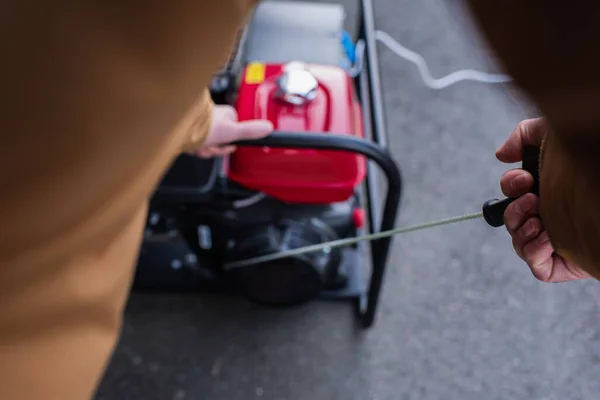
Types of Generators: Gasoline, Diesel, or Inverter?
There are three main types of generators on the market:
-
Gasoline generators – affordable, compact, and suitable for short-term use. The downside is higher fuel consumption and noise.
-
Diesel generators – more economical in terms of fuel consumption, have a longer service life, but are more expensive.
-
Inverter generators – ideal for sensitive electronics, provide stable voltage, and operate more quietly, but are more expensive than traditional models.
The choice depends on the duration of use and budget. If a generator is needed for occasional power outages, a gasoline one will suffice. For prolonged autonomous operation, a diesel generator is preferable.
Key Criteria for Choosing a Generator for a Private House
For the generator to work efficiently, consider the following parameters:
-
Starting type – manual, electric starter, or automatic start.
-
Fuel tank capacity – determines the runtime without refueling.
-
Noise level – important for comfortable use.
-
Voltage stabilization – especially crucial for powering electronics.
-
Size and weight – affect mobility and installation.
Additional Features and Generator Safety
For convenient use, pay attention to the following additional features:
-
Automatic shutdown in case of overload – protects the generator from damage.
-
Oil level sensor – helps prevent overheating.
-
Eco mode – reduces fuel consumption.
-
Short-circuit protection – enhances operational safety.
It is also important to install the generator correctly: it should not be placed in enclosed spaces without ventilation, as this poses a danger due to carbon monoxide emissions.
Which Is Better: a 220V or 380V Generator?
The choice between a 220V and a 380V generator depends on the type of electrical network in your house. If you have a standard single-phase connection, a 220V generator will suffice. For homes with a three-phase network (for example, if a three-phase electric boiler or pump is used), a 380V generator is required.
It is worth remembering that three-phase generators can also be used for single-phase devices, but only if the load is evenly distributed.