Night vision devices: how to see in the dark and gain an advantage
In darkness, the human eye is almost powerless. However, in modern combat conditions, site security, patrolling, or even hunting, night vision devices (NVDs) provide capabilities that just a few decades ago seemed like science fiction. These devices allow users to see in the dark or in low-light conditions, detecting people, vehicles, or animals without using visible light sources that could reveal their position.
This article explores how night vision devices work, their types, use cases, and what to consider when choosing one.
What Is a Night Vision Device?
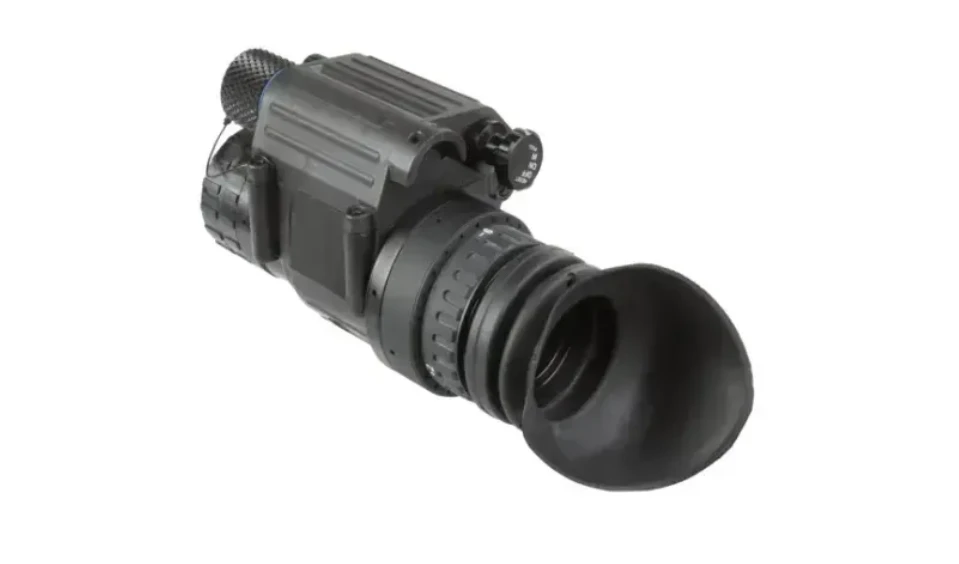
A night vision device (NVD) is an electro-optical instrument that enables vision in the dark by amplifying existing light. Light sources can include stars, the moon, infrared radiation, or residual illumination from distant sources.
The operating principle is based on capturing weak light signals and electronically amplifying them. The image seen by the user typically has a green or black-and-white tint.
How a Night Vision Device Works
The core of the device is the image intensifier tube (IIT). It captures photons (light particles) entering the device and converts them into electrons. These electrons are then multiplied and converted back into visible light to form an image on the eyepiece screen.
Some models also feature infrared (IR) illumination, which is invisible to the naked eye but provides extra light in complete darkness.
Main Generations of Night Vision Devices
-
First-generation NVDs
Affordable and suitable for short-distance observation. They often show edge distortion and require IR illumination in total darkness. -
Second-generation NVDs
Equipped with a microchannel plate for better clarity and range. Commonly used in military applications. -
Third-generation NVDs
Use gallium arsenide photocathodes, offering top image quality, high sensitivity, and extended lifespan. Preferred by special forces and military units. -
Digital night vision devices
Based on digital sensors. Offer video recording, external connectivity, and often integrate thermal imaging.
Types of Night Vision Devices
-
Monoculars – compact, lightweight, ideal for one-eye observation
-
Binoculars – provide depth perception, comfortable for prolonged use
-
Night vision goggles – mountable on helmets or headgear, allowing hands-free use
-
Night vision scopes – attach to weapons, enabling accurate nighttime aiming
-
Vehicle-mounted NVDs – used in military vehicles for night driving
Where Night Vision Devices Are Used
-
Military – reconnaissance, surveillance, shooting, and night operations
-
Hunting – observing wildlife at night
-
Security services – patrolling, guarding facilities, detecting intruders
-
Rescue operations – locating people in darkness, including in forests or mountains
-
Civilian use – outdoor activities, camping, airsoft, property monitoring
Advantages of Night Vision Devices
-
Enable vision without external light sources
-
Reduce risk of detection
-
Provide tactical advantage
-
Enhance safety during nighttime activities
-
Allow confident and accurate actions
Limitations and Drawbacks
-
Limited field of view compared to daylight vision
-
Dependence on ambient light or quality IR illumination
-
Require power sources
-
High cost of premium models
How to Choose a Night Vision Device
Consider the following factors:
-
Purpose (hunting, military, security)
-
Generation of IIT or digital sensor
-
Detection range
-
Weight and design type
-
IR illumination and video recording features
-
Battery type and operating time
Night vision devices https://delta1.ua/pribory-nochnogo-videniya/ are not just technical innovations but essential tools for operating in total darkness. They have become indispensable in military operations, security, rescue missions, and civilian use. With continuous technological advancement, these devices are becoming more affordable, compact, and effective. If you're looking to navigate confidently in the dark — a night vision device is your trusted ally.